


Garlic in Drum Packing: Plastic vs. Iron Comparison
Jun 30, 2026
Plastic Drum vs. Iron Drum: Packaging Options for Bulk Garlic Exporters

Industrial procurement of bulk pickled or acidified garlic requires selecting containment vessels that resist chemical degradation while optimizing shipping cube utilization. For large-scale garlic processing plants and global food factories, choosing high-density polyethylene (HDPE) plastic drums over lined iron drums prevents chemical interactions with high-salinity brine (21-22% NaCl) and low pH acid profiles (pH 2.5-3.8). This technical assessment outlines the corrosion resistance, physical durability, and logistics metrics of 40kg to 370kg packaging configurations to secure structural batch integrity during sea transit.
Material Corrosion Resistance: Chemical Stability in Brine and Acid Media
Garlic preserved via brining or acidification generates a corrosive environment containing high concentrations of sodium chloride (NaCl) and organic acids (citric or acetic acid). Packaging choices determine whether the cargo arrives compliant with heavy metal limits or suffers from industrial degradation.
HDPE Plastic Degradation Resistance: High-density polyethylene is chemically inert to formulations where pH < 4.6 and salinity exceeds 20%. It completely avoids chemical reactions, ensuring zero rust contamination or iron ion leaching into the garlic cloves.
Lined Iron Drum Vulnerabilities: Epoxy-phenolic interior coatings on iron drums prevent corrosion if intact. However, mechanical friction during long-haul transit can scratch internal linings, exposing raw steel to acid. This leads to oxidation, product discoloration (pinking/browning), and elevated heavy metal limits (Iron/Fe contamination).
Preservative Interaction (SO2): When processing garlic with sodium metabisulfite (SO2 residue < 50ppm), the off-gassing components react with metallic surfaces if the internal barrier fails, compromising international food safety standards (HACCP/FDA).

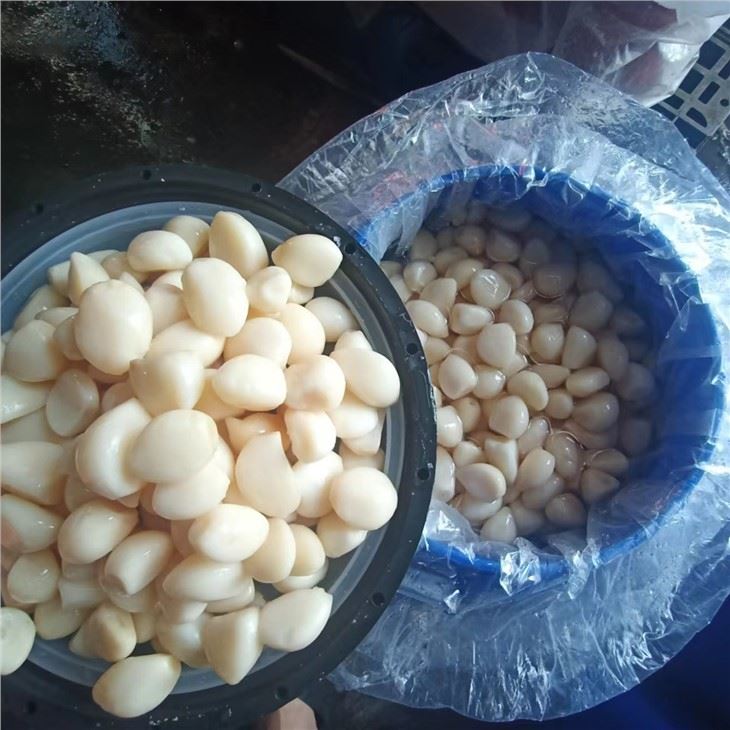
Structural Durability: Loading, Discharge, and Mechanical Stacking Safety
Industrial processing plants require packaging that withstands multi-tier vertical stacking in raw material warehouses without bursting or causing liquid leakage.
| Technical Parameter | HDPE Plastic Drums (50kg / 370kg Specifications) | Lined Iron Drums (Standard 200L Configurations) |
| Material Formulation | Food-Grade High-Density Polyethylene (HDPE) | Cold-Rolled Carbon Steel + Epoxy-Phenolic Liner |
| Chemical Resistance (pH 2.5–3.8) | Stable; zero degradation or leaching | Conditional; vulnerable to micro-fractures in liner |
| Compressive Load Resistance | High vertical elasticity; resists cracking up to 3 tiers | Rigid; prone to structural denting under impact |
| Tare Weight Impact | Lower tare weight (approx. 2.5kg for 50kg drum) | Higher tare weight (approx. 18-22kg for 200L drum) |
| Closure Mechanism | Heavy-duty threaded screw caps or lever rings | Bolt ring closures or dual steel bungs |
| Compliance Verification | FDA 21 CFR 177.1520, BRC GS Pack V7 | ISO 15750 Standard for Metallic Containers |
Container Optimization: 20'FCL Loading Efficiency and Payload Calculations
Logistical cost control requires maximizing the net drained weight within a standard 20' FCL (Full Container Load) while adhering to international road weight limitations. Sourcing garlic in drum packing using specific 50kg plastic formats alters container configuration compared to large 370kg drums.
50kg Plastic Drum Breakdown (Net Drained Weight > 60%)
For small-scale inventory rotation, the 50kg garlic in brine plastic drum format offers high flexibility. Each drum contains approximately 50kg gross weight with a minimum drained weight of 30kg of garlic cloves. A standard 20'FCL floor-loads exactly 360 drums without pallets, yielding 18.0 metric tons gross weight.
Frequently Asked Questions
What is the Minimum Order Quantity (MOQ) for bulk drum garlic shipments?
+
-
Our standard factory MOQ is one 20-foot FCL container. This loading configuration accommodates either 360 units of our 50kg plastic drums or 60 units of our large 370kg industrial plastic drums, ensuring maximum transport efficiency and stable freight costs.
How do you guarantee the shelf life and stability of garlic packed in plastic drums?
+
-
Our acidified and brined garlic maintains a commercial shelf life of 24 months when stored in a cool, dry warehouse below 25℃. The airtight HDPE screw-top lids prevent atmospheric oxygen ingress, halting oxidation and maintaining equilibrium salinity levels at 21-22%.
What is the sample policy for verifying garlic sizing and drained weight?
+
-
We provide 1kg to 2kg vacuum-packed or small-jar samples free of charge for brix, pH, and microbiological testing by your QA department. The importer handles the international courier fees, which are credited against the first commercial contract Bill of Lading.